
Unlearn in Alzheimer's disease
The scientific intelligence layer for clinical development
Powered by digital twins, data, and AI
In Alzheimer’s disease, where trial failure rates are high and every patient matters, Unlearn turns data into a compounding advantage — so each trial informs the next, decisions get sharper earlier, and new therapies reach patients faster.
.svg)
In patient costs saved across multiple assets
Faster enrollment, plus >$30M saved on a Phase 3 registrational study
Additional sales potential from accelerated timelines
The Unlearn Platform
Plan, monitor, analyze — one connected platform organized around the key decisions that shape every clinical trial.
Plan
Trial Planning and Simulations
Bring together the critical components for early planning and design — where decisions are iterative and rationale must stay defensible across review cycles. Teams work from a shared source of truth, reducing rework and accelerating alignment.
AI-powered literature and precedent review across PubMed, ClinicalTrials.gov, and drugs@FDA — align on precedent in days, not weeks.
Explore harmonized trial and real-world data to validate assumptions across ADAS-Cog 13, CDR-SB, MMSE, and p-tau217.
Build and compare explainable, reproducible trial-design scenarios before protocol finalization.
.avif)
.avif)
.avif)
Monitor
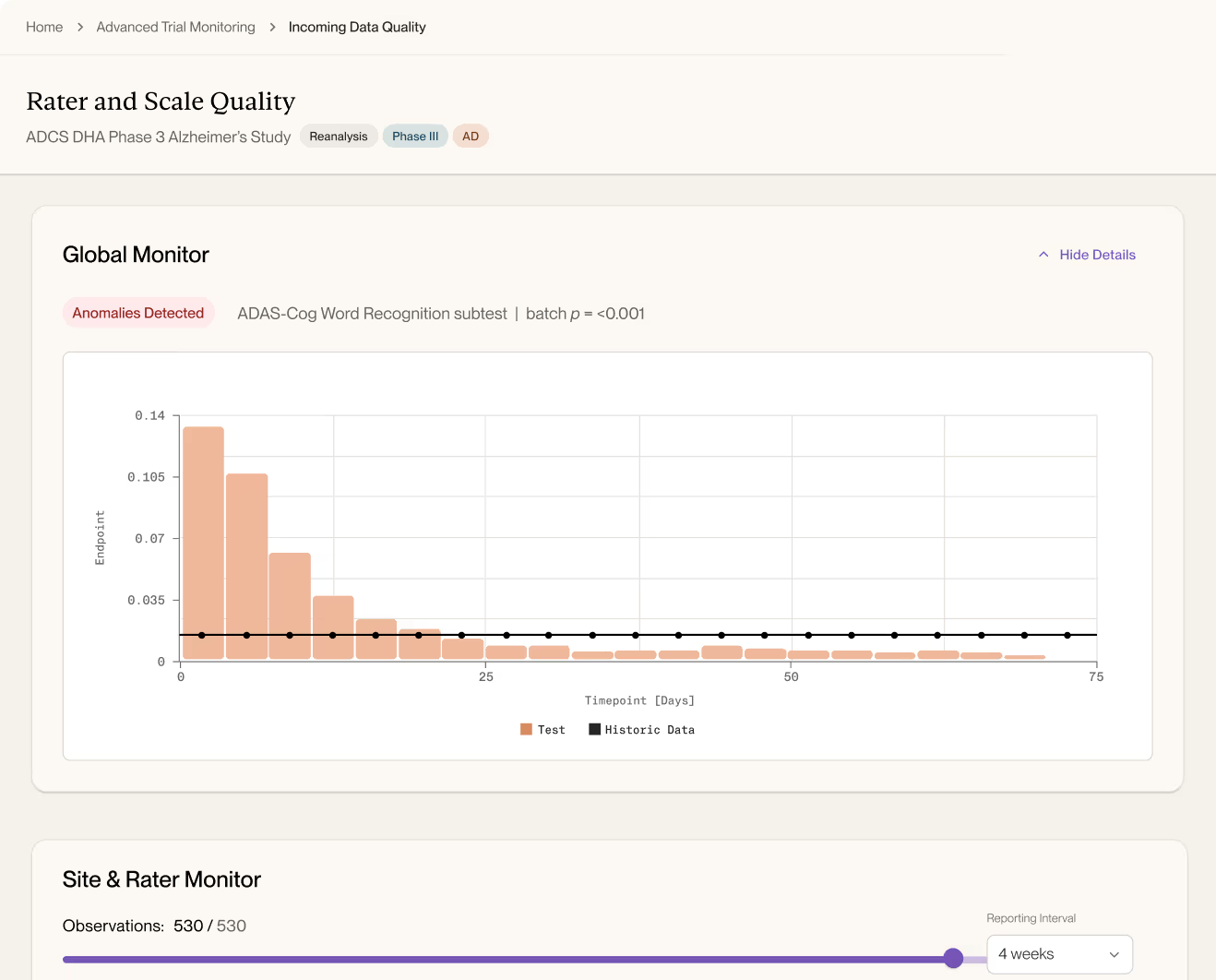
Advanced Trial Monitoring
Turn blinded signals into curated insights that support trial decision-making and keep execution on track.
Detect anomalies as they emerge — unexpected values, off-trajectory responders, and multivariate signals benchmarked against historical patient trajectories rather than generic, population-wide cutoffs.
Flag which patient observations warrant medical review, which outliers require investigation, and which sites to escalate.
Analyze
Trial Analyses with Digital Twins
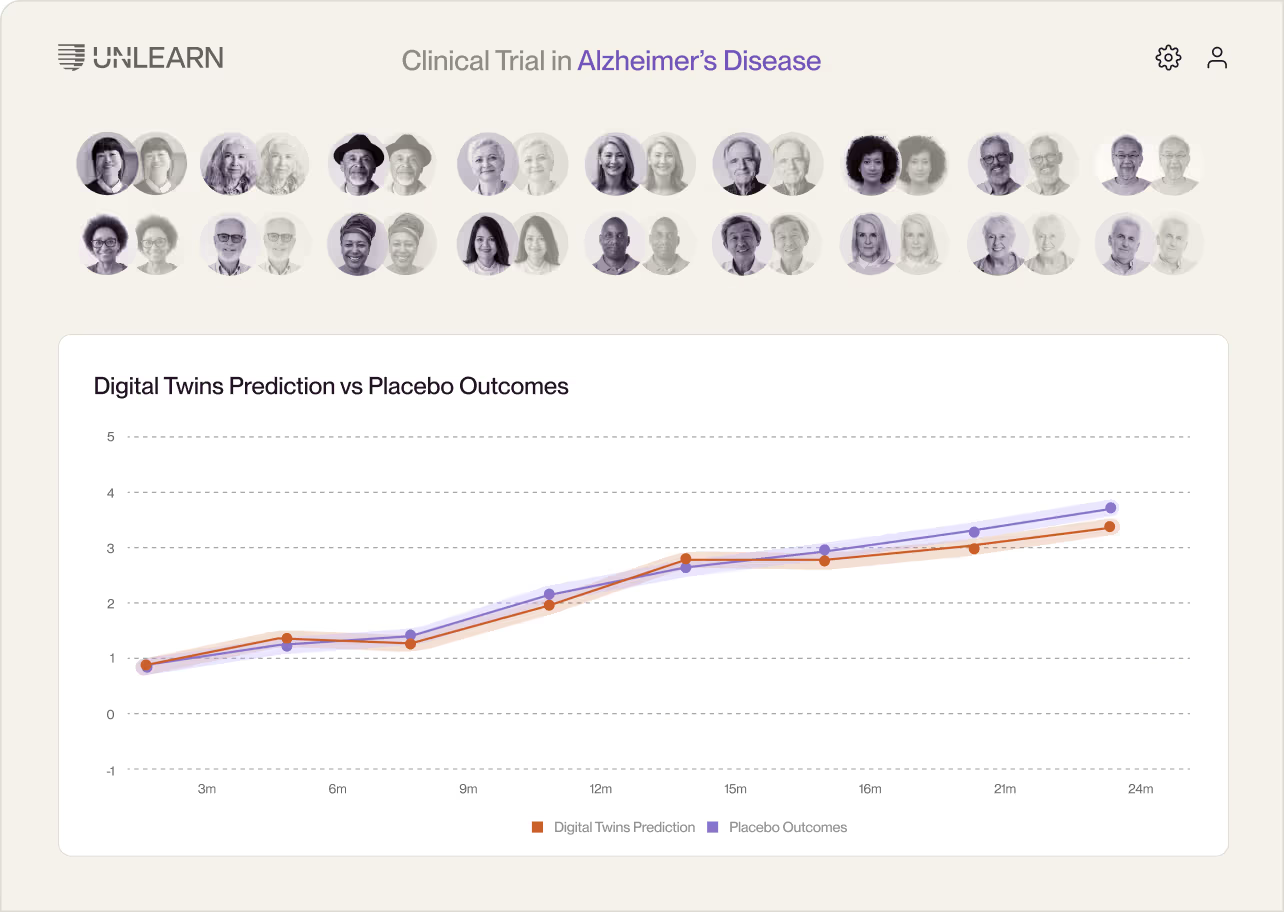
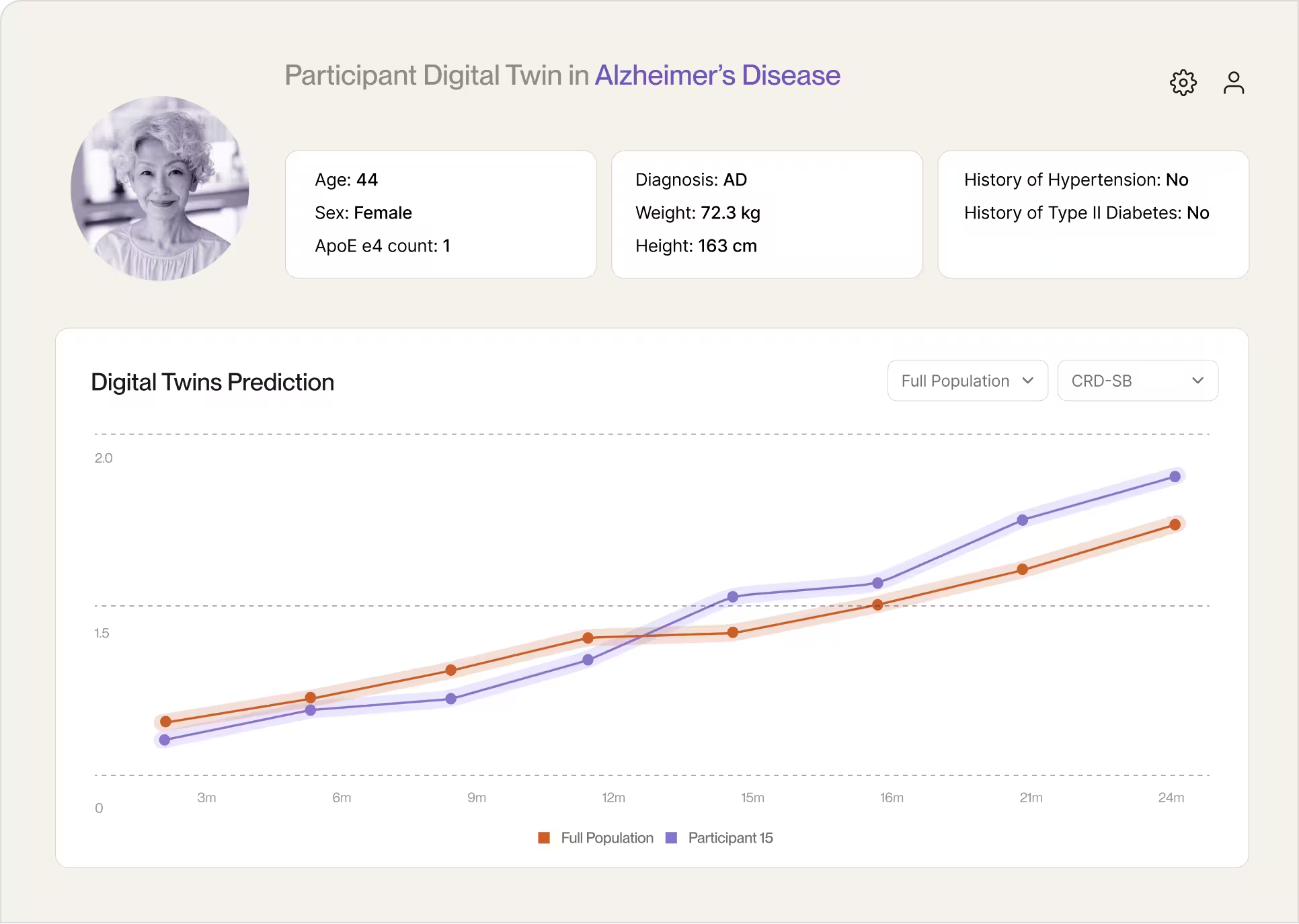
AI-generated digital twins forecast each participant’s control outcomes at every future time point — the powering technology for more rigorous analysis.
Run smaller RCTs that maintain or boost power without additional participants. Validated across multiple Phase 2 and Phase 3 AD trials; qualified by EMA and aligned with FDA guidance.
Digital twins serve as an AI-generated externally controlled arm where randomization is infeasible.
Improve sensitivity in interim looks and subgroup analyses to catch signals traditional methods miss.

Technology
Digital Twin Generators
Digital Twin Generators (DTGs) are machine learning models that produce individualized forecasts, called digital twins, of each trial participant’s expected clinical outcomes under placebo. These forecasts are generated using baseline data and include predicted values for item-level assessments, labs, vitals, and other clinical measures. DTGs are powered by Neural Boltzmann Machines, a proprietary machine learning architecture optimized for probabilistically modeling complex, multivariate, clinical time-series data.
.webp)

Regulatory Acceptance
CHMP qualifies PROCOVA and that the proposed procedures could enable increases in power and/or decreases in sample size in phase 2 and 3 in clinical trials with continuous outcomes.
FDA recommends that sponsors adjust for covariates that are anticipated to be most strongly associated with the outcome of interest… the sample size and power calculations can be based on adjusted or unadjusted methods.
Case studies from retrospective analyses
Proof across Alzheimer's development
Control-arm reduction
Planned cost savings, PH3
Planned time savings, PH3
CASE 1 — ABBVIE · AD PHASE 2 · AAIC 2024
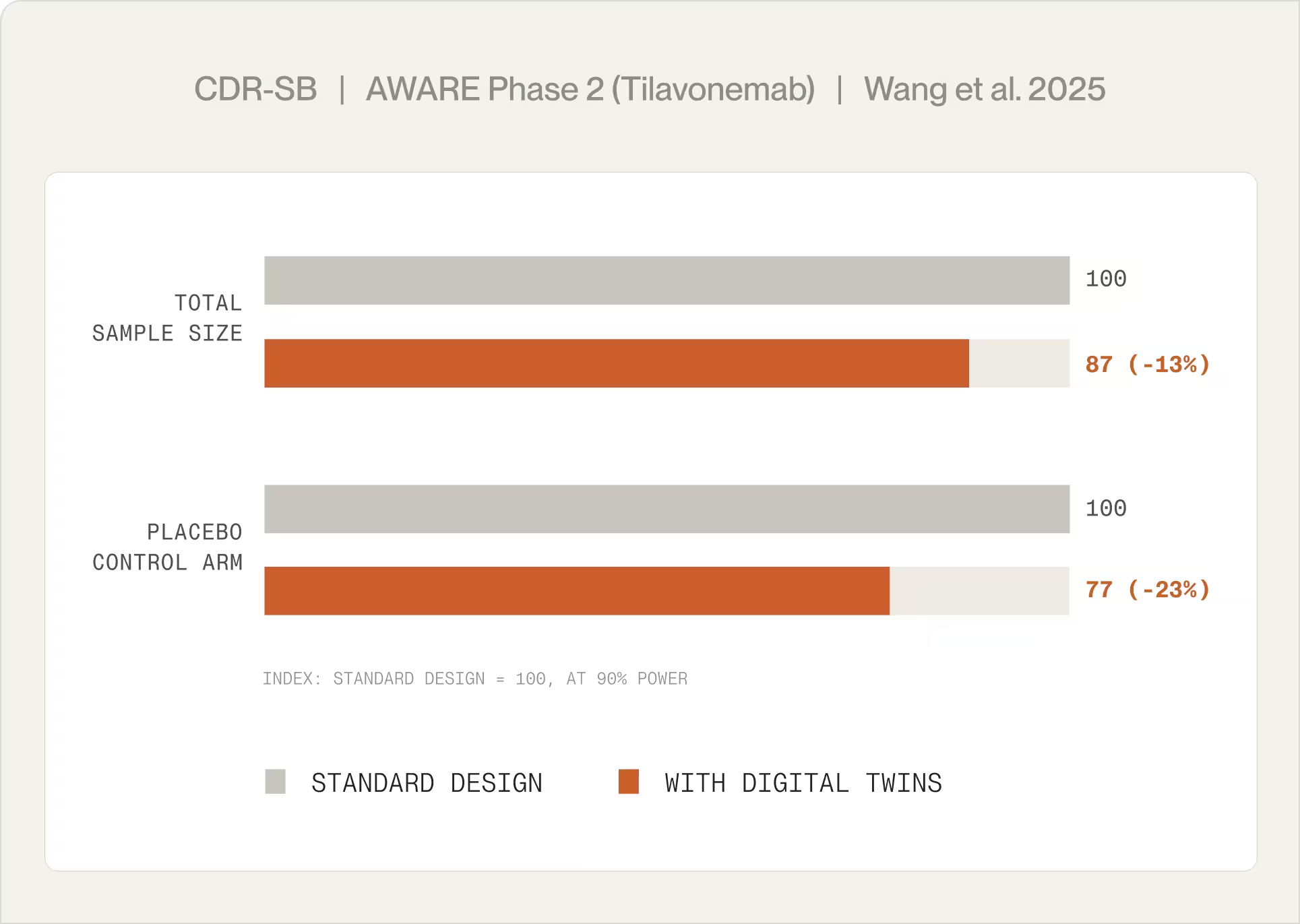
AbbVie utilized Unlearn’s digital twins in their completed Phase 2 AWARE study (NCT02880956), a randomized, double-blind, placebo-controlled trial in early AD, to demonstrate the potential of participants’ digital twins in reducing sample sizes or increasing power. Efficacy was assessed using CDR-SB at Week 96 across different doses.
The trained AD-DTG was pre-specified before conducting the retrospective analyses. Prognostic scores derived from participants’ digital twins were used to estimate treatment variance for the clinical outcomes, translating into sample size reductions or power increases without compromising Type-1 error control.
Peer-reviewed publication — Wang D, et al. Alzheimer’s Dement. 2025;11:e70181.
CASE 2 — PHASE 3 · BAPINEUZUMAB
A leading global pharmaceutical company used digital twins in three randomized, double-blind, placebo-controlled completed Phase 3 trials in mild-to-moderate AD and mild cognitive impairment to demonstrate the potential of participants’ digital twins in reducing sample sizes or increasing study power using ADAS-Cog11 and CDR-SB clinical outcomes. Efficacy was assessed using ADAS-Cog11 score at 18 months.
APOE e4 allele carriers (NCT00575055); APOE e4 allele non-carriers (NCT00574132).
Unlearn x AbbVie
Conference
Vienna, Austria

Evidence
Driving Impact Across Clinical Development
Explore how our partners are accelerating their clinical development programs with us.
Reduce sample sizes while maintaining power or boost power without adding participants
Strengthen evidence and confidence in early-stage studies
The collaboration with Unlearn and the resulting data further increase our confidence in our pioneering approach towards achieving symptomatic relief and disease modification in Alzheimer's. This will support our efforts to advance an optimized second-generation therapy. Digital twins offer a new lens for interpreting biomarker trends over time—especially in early-stage trials where every data point matters.


