
Every clinical trial is a chain of high-stakes decisions.
Unlearn can help at any point in your study. Digital twins, data, and AI strengthen each one — so trial teams can commit with confidence, and evidence compounds from one decision to the next.
%201%20(1).svg)

participant’s clinical outcomes
.avif)


participant’s clinical outcomes



participant’s clinical outcomes

In design
Evidence, data, and digital twins inform smarter design decisions.
Sample size, eligibility criteria, endpoints, and comparators are still open, and governance approval is the gate. Unlearn simulates the study against your actual criteria, validates against precedent, and quantifies the design tradeoffs, so your team walks into governance with numbers instead of positions.
Eliminate scattered searches and align on precedent in days, not weeks.
Build and compare trial-design scenarios to evaluate endpoints, eligibility criteria, sample size, and constraints, and to pressure-test sample size and PTS assumptions.
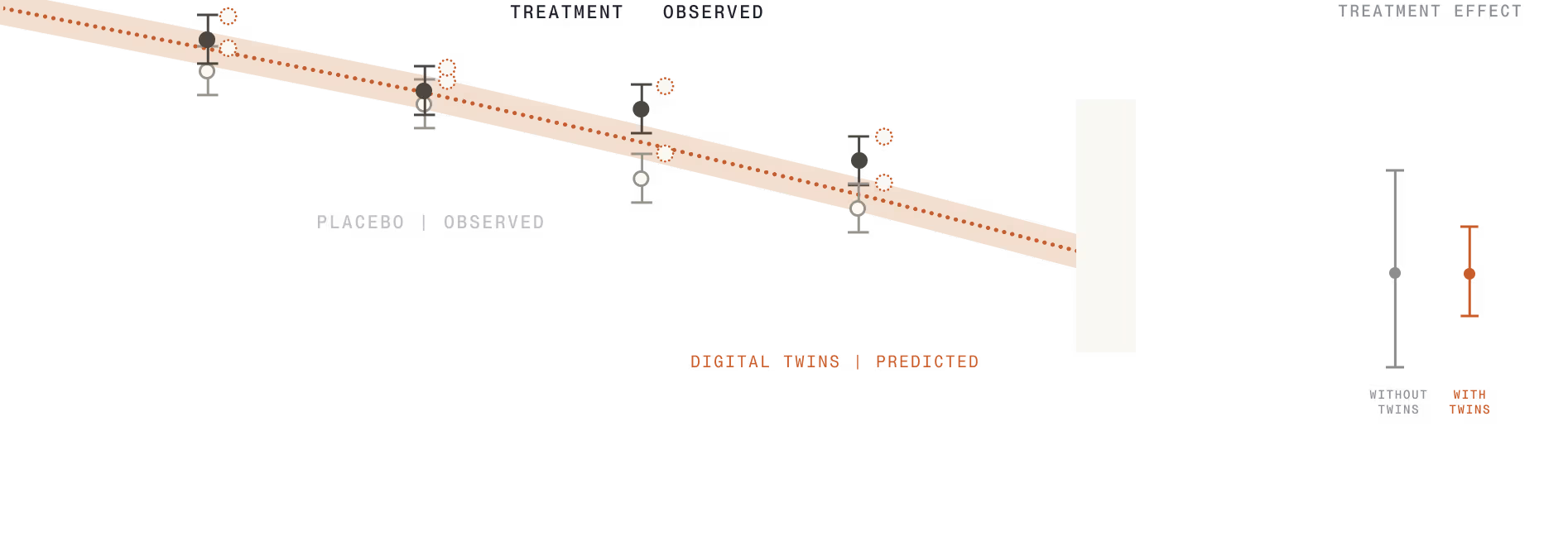
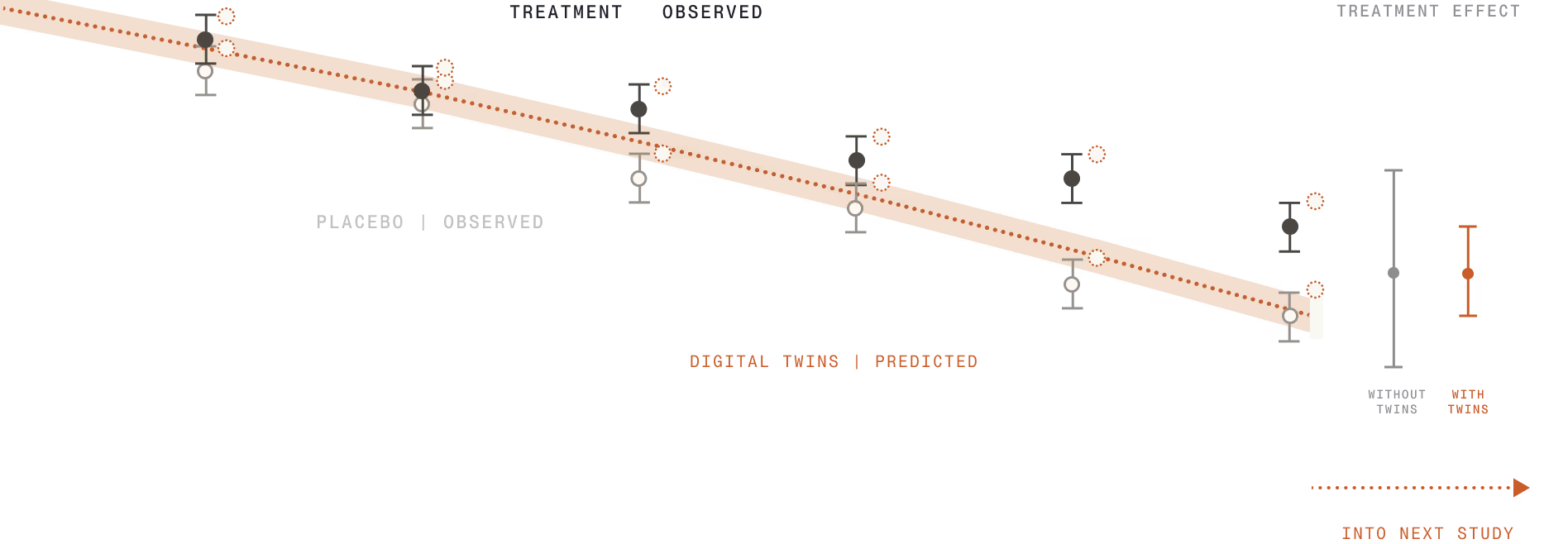
Use PROCOVA, our EMA-qualified and FDA-supported method, to reduce sample sizes in randomized controlled trials while maintaining power, or boost power without adding patients.
Design externally controlled studies where randomization is not an option: anticipate the impact of the external comparator and select the eligibility criteria that give an open-label study its best chance of a clear, interpretable readout.
sample size reduction locked into study design
total cost savings for a Phase 1/2 study
Study in Progress
The protocol is locked. The analysis plan can still be optimized.
Every interim decision, whether to stop for efficacy, stop for futility, re-estimate the sample size, or accelerate the program, rests on an interim estimate. Twin-based covariate adjustment tightens that estimate without adding patients. Pre-specified analyses can be added to the statistical analysis plan before unblinding, and design scenarios can be re-run when new evidence emerges mid-study.
Add PROCOVA, the EMA-qualified and FDA-supported method, to the statistical analysis plan before unblinding to raise power at interim looks and in subgroup analyses.
Re-run design scenarios against new evidence, whether a competitor readout, a new publication, or blinded data drifting from design assumptions, to confirm the current design holds or identify what to change.
Unlearn scientists generate digital twins from baseline data already collected, draft the pre-specified analysis for the SAP, and deliver the twin-adjusted analysis at interim and at readout.
more effective completers
An 18% variance reduction makes the interim estimate as precise as if ~22% more participants had completed.
power at interim
From a 60% baseline, PROCOVA raises power to 70% and Bayesian PROCOVA to 78%, without adding participants.
interim analyses needed
In a re-analysis of a completed Phase 2 study, Bayesian PROCOVA would have supported stopping at the first interim rather than running to compleletion.
After readout
After the study reads out, digital twins change how much information can be unlocked from the data already collected, enabling more confident, better-informed decisions for your program.
Gain a deeper understanding of your completed study by contextualizing the population, endpoints, and variability, and turn those insights into clearer development decisions.
Integrating participants’ digital twins into your study improves sensitivity across primary and secondary endpoints for a clearer signal of efficacy.
Re-evaluate historical trial data using regulatory-aligned methods to support learning across programs.
Bring stronger evidence to the decision that follows readout: whether and how the program continues.
lower failure rate for effective drugs
Up to 40% lower failure rate for effective drugs in borderline studies.
lower cost for the next ALS trial
A completed Phase 3 ALS trial, re-analyzed with digital twins: the next study keeps full power with 92 fewer participants, roughly $14M less.
fewer participants
AbbVie's completed Phase 2 Alzheimer's study, re-analyzed: evidence for a confirmatory trial with 17% fewer participants and no loss of power.


