
Driving clarity in clinical development
Powered by digital twins, data, and AI
Every clinical trial is a chain of high-stakes decisions made by experts working across fragmented data, tools, and institutional memory. Unlearn integrates the evidence, modeling, and reasoning behind those decisions, so trial teams can commit with confidence, and so each decision builds on the last.

Real-world Results
Accelerating Clinical Development in Alzheimer’s Disease
We work in neuroscience, immunology, metabolic disease, and more.
Solutions
The scientific intelligence layer for clinical development
Every trial is a chain of key decisions. We help you make each one more confidently.
Plan, monitor, analyze — one connected platform organized around the key decisions that shape every clinical trial.
Trial Planning and Simulations
Bring together the critical components for early planning and design — where decisions are iterative and rationale must stay defensible across review cycles. Teams work from a shared source of truth, reducing rework and accelerating alignment.
Continuously search, structure, and summarize relevant literature and regulatory precedent from sources like PubMed, ClinicalTrials.gov, and drugs@FDA — all in one place. Eliminate scattered searches and align on precedent in days, not weeks.
Explore harmonized clinical trial and real-world datasets to validate clinical and statistical assumptions. Assess population characteristics, endpoint behavior, and benchmarks.
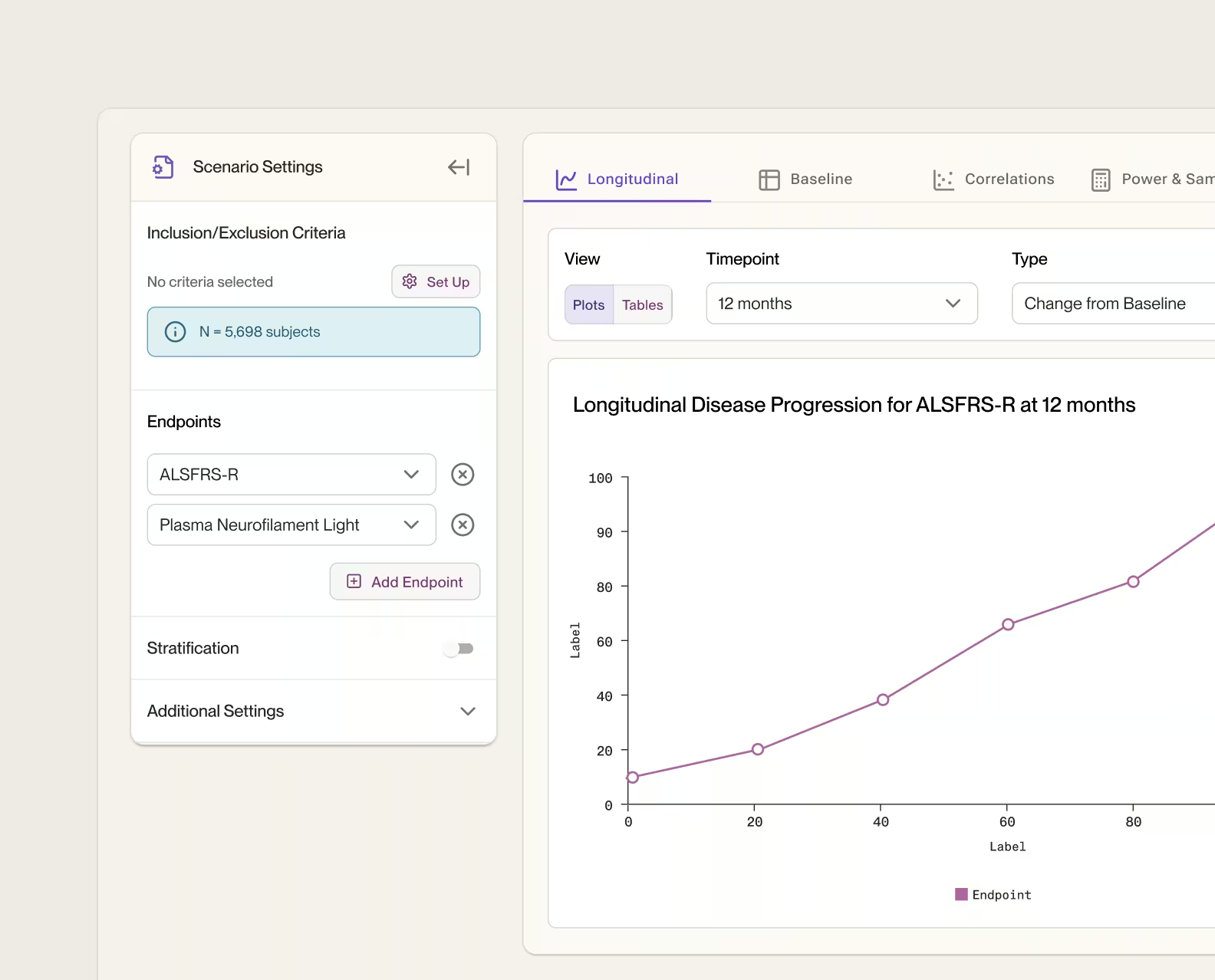
Build and compare trial-design scenarios to evaluate endpoints, inclusion/exclusion criteria, sample size, and constraints. Every scenario is reproducible, and linked to underlying evidence — supporting informed design trade-offs before protocol finalization.


Advanced Trial Monitoring
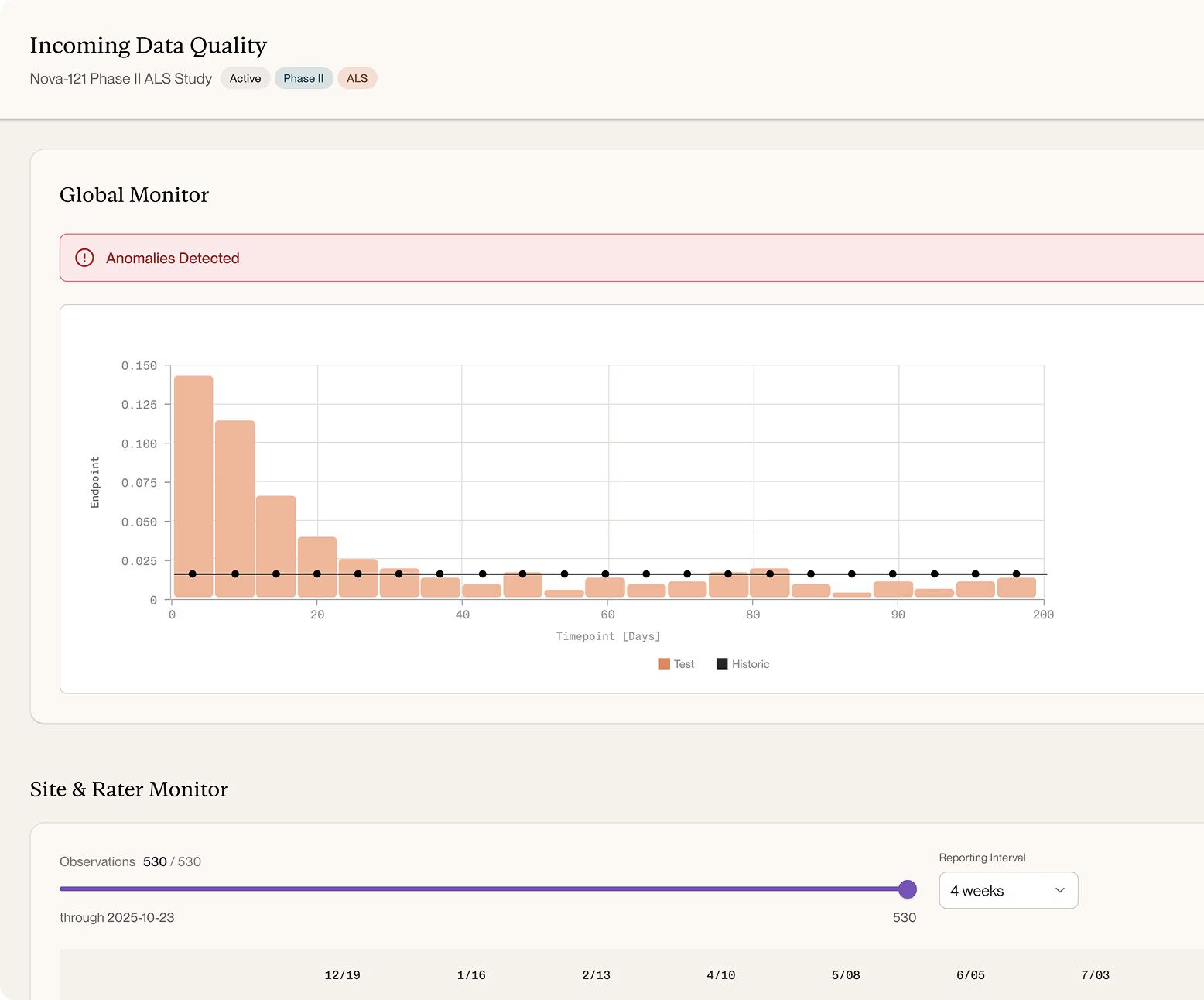
Turn blinded signals into curated insights that support trial decision-making and keep execution on track.
Trial Analyses with Digital Twins
AI-generated digital twins forecast each participant’s control outcomes at every future time point — the powering technology for more rigorous analysis.

Trusted by leading sponsors
Partnerships
Collaborating with leaders to move the industry forward.
Explore how leading biopharma companies are applying Unlearn’s AI-powered solutions in active studies today to reach clinical milestones faster.
.png)
Press

Press

Press

Press


